Powered by datasets & research from
Equip your clinical team with volumetric MRI analysis. Asteri Neuro-AI integrates into existing workflows to automatically flag at-risk patients, bypassing standard radiology limits with 98.4% diagnostic confidence.
Powered by datasets & research from
Doctors hate 'black box' AI. To integrate with human workflows, Asteri Neuro-AI (v2.1) shows its work by generating real-time Saliency Maps over internal brain tissue.
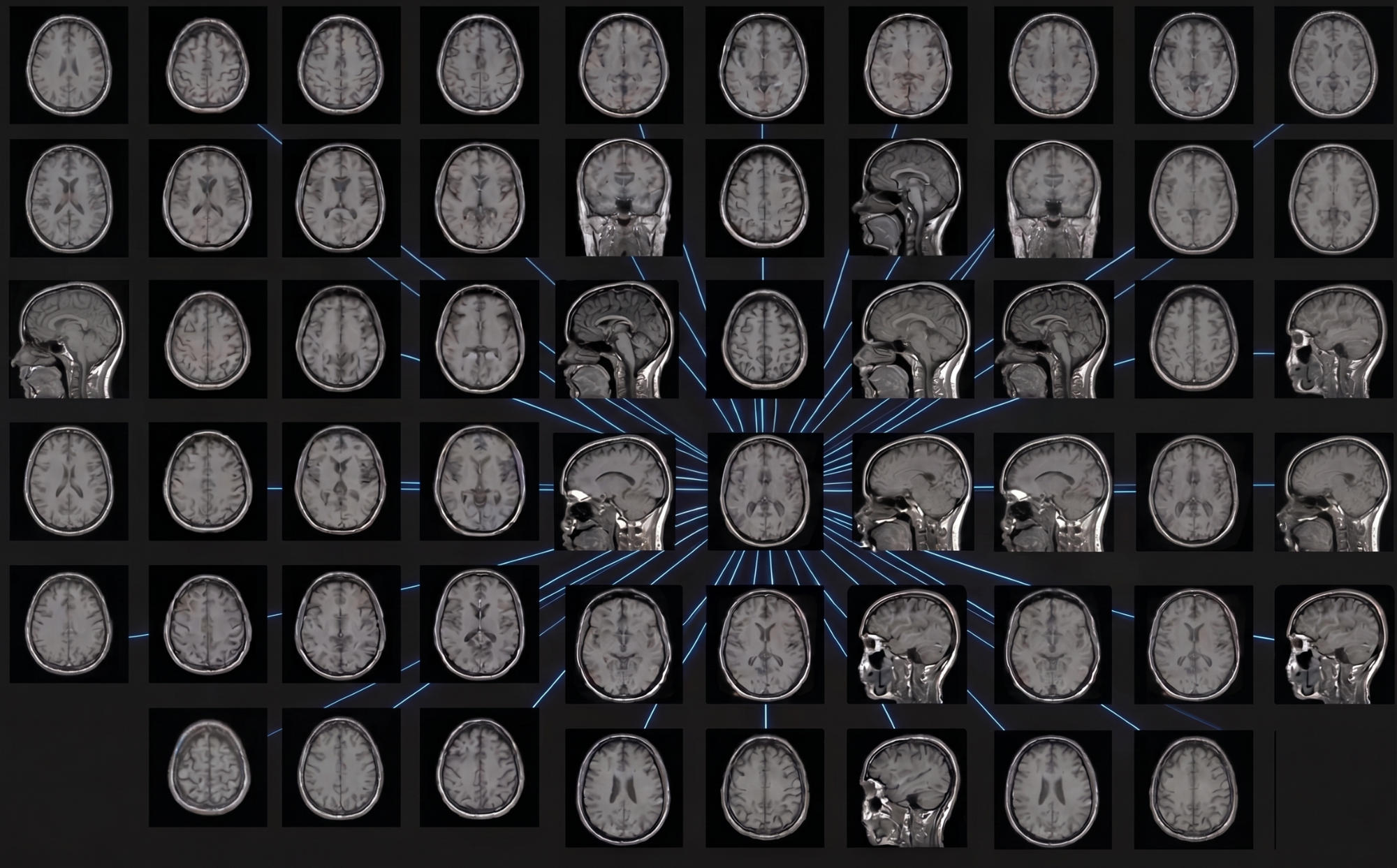
Saliency maps confirm the model focuses on gray/white matter and ventricles, ignoring the high-contrast skull.
Our preprocessor uses Connected Component Analysis to remove the skull and isolated background noise. This forces the model to analyze internal brain tissue and structures exclusively.
We provide a transparent visual report (heatmaps) highlighting the specific voxels within the 3D MRI volume that contributed most significantly to the final diagnostic score.
Upload a scan, and watch the pipeline execute its diagnostic steps, generating a final risk score and interpretation directly from the API.
Awaiting Scan Data...
File Reference
No File Selected
Upload a raw ADNI ZIP file to convert it into a web-ready .nii.gz format for the diagnostic viewer.

Founder & CEO
Driven by a passion for intersectional technology and medicine, Maanvik Uppal is an active medical researcher and student. Driven by Alzheimer's Disease (AD), Maanvik built Asteri Neuro-AI (v2.1) to focus on using 3D Convolutional Neural Networks (3D-CNNs) to revolutionize early dementia detection via volumetric MRI analysis.
Everything you need to know about the pipeline.
Standard radiology relies on human observation of flat, 2D MRI slices. Asteri Neuro-AI analyzes the complete 3D volume (voxel data). This allows the 3D-CNN to process subtle, micro-structural density patterns across internal brain structures (gray and white matter) that the human eye cannot consistently detect, enabling detection years earlier.
No. Asteri Neuro (v2.1) is designed to run on standard T1-weighted structural MRI scans (the most common MRI sequence used in clinical neurology). The preprocessor converts the raw DICOM or NIfTI data into uniform, 128x128x128 blocks for consistent model analysis.
No, not yet. Asteri Neuro v2.1 is actively in Phase 2 of medical research. The system is designed to provide high-confidence *screening probability reports*, which must be reviewed by qualified clinicians and neurologists. The generated Saliency Map ensures the clinician understands *why* the AI flagged a patient, assisting rather than replacing human judgment.
Asteri Neuro-AI
Technical Overview 2026
Request our comprehensive clinical overview to see the methodology, dataset breakdowns, and validation (Saliency Maps) behind our diagnostic approach.
We are currently onboarding select clinics and research partners for our beta program. Join the waitlist for technical updates and partnership calls.
No spam. Privacy guaranteed.